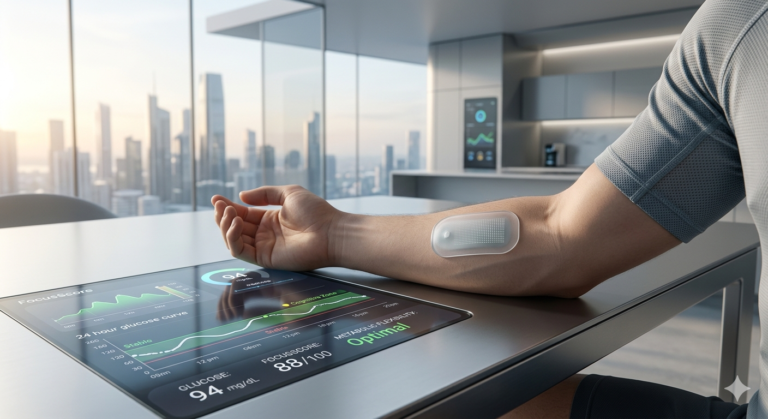
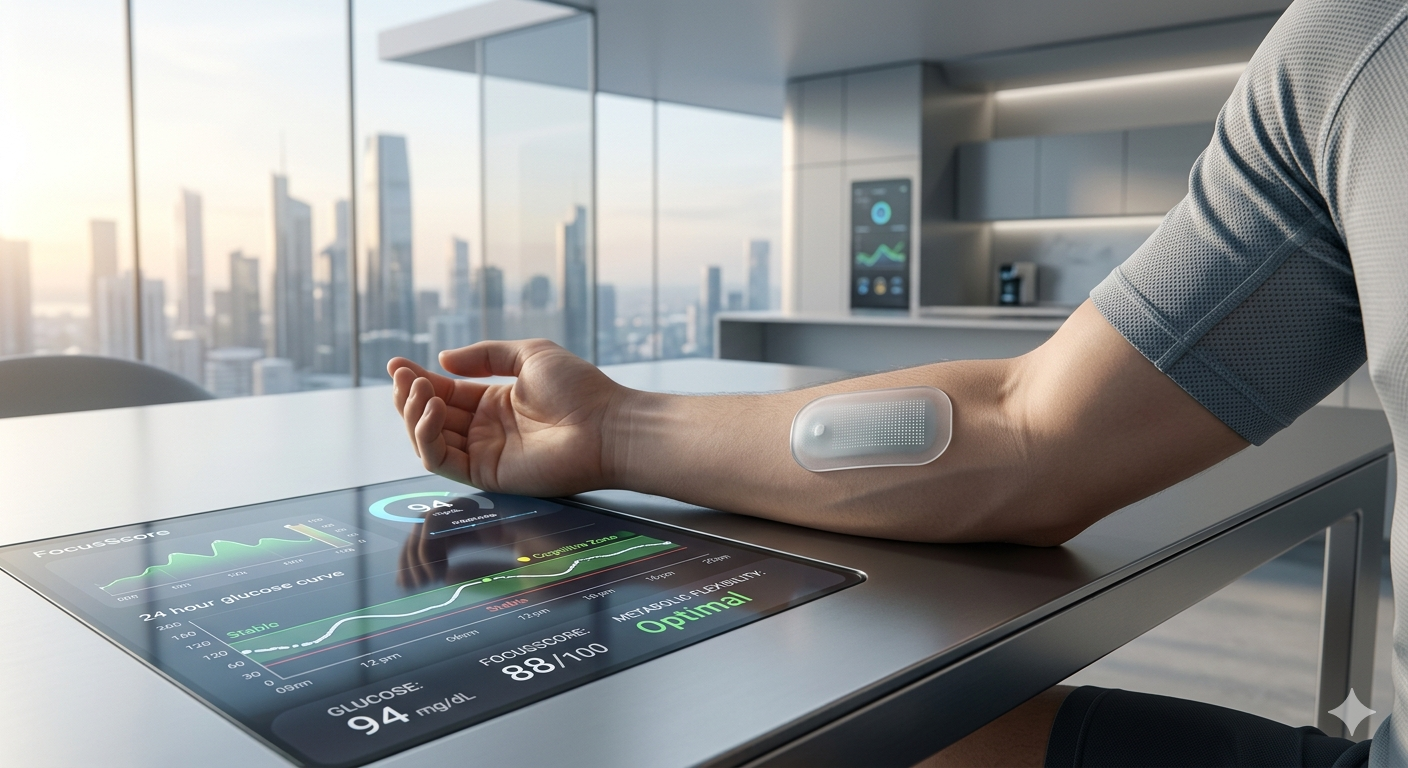
In 2026, Continuous Glucose Monitors (CGMs) have transcended their medical origins to become the ultimate biometrics tool for the healthy optimizer, providing real-time data on how lifestyle choices impact metabolic flexibility and long-term health. The market has fractured into specialized devices catering to distinct optimization goals, making the choice between them a matter of prioritizing nutritional precision, athletic performance, or cognitive longevity. This article breaks down the three dominant non-diabetic CGMs of 2026, revealing which device actually delivers the information gain needed to hack your personal biology.
Why are Non-Diabetics Obsessed with CGM Data in 2026?
Five years ago, wearing a CGM if you didn’t have diabetes was seen as an extreme “biohacker” eccentricity. Today, it’s as common as wearing a smartwatch. The reason is a fundamental shift in our understanding of health: we no longer accept “average” or “normal” lab results. In 2026, we demand optimization.
CGMs provide the missing link in personalized wellness. They don’t just tell you what you ate; they tell you how your body responded to it. This data is critical because glycemic variability—the sharp spikes and crashes in blood sugar—is now recognized as a primary driver of inflammation, oxidative stress, and mitochondrial dysfunction. By smoothing these curves, non-diabetics are unlocking unprecedented levels of energy, focus, and disease prevention.
2026 CGM Comparison: The Non-Diabetic Leaders
| Feature | deviceA: NutriCurve Ultra | deviceB: PerformanceFlow 360 | deviceC: CognitiveCore Sync | 2026 Trend Score |
| Optimization Focus | Comprehensive Nutritional Response | Athletic Power & Recovery | Stable Focus & Brain Health | 9.4/10 |
| Unique Hardware | Sub-dermal Optical Sensor (No Needles) | Integration with Wearable Tech (e.g., Apple Watch) | Adaptive AI Pattern Recognition | 9.7/10 |
| Software Analytics | Meal Score & Personalized Recipes | Zone Management & Fueling Guide | FocusScore & Sleep Quality | 9.1/10 |
| Cost & Ease | Mid-Range Subscription | High-End One-Time Purchase | Comprehensive Health Plan |
What the Data Doesn’t Tell You: The Psychological Burden of “Perfect” Data
I’ve worn a CGM almost continuously for the last seven years, and I’ve advised hundreds of clients on how to interpret their data. What the shiny app interfaces don’t prepare you for is the mental toll of seeing a huge red spike after your “healthy” oatmeal.
The nuance that the algorithms struggle to convey is the “Context of the Spike.” A sharp glucose rise after a high-intensity workout is vastly different—medically and functionally—than a spike from a sugary donut. The deviceB PerformanceFlow might alert you to a critical glycemic drop, but it can’t always distinguish between “bonking” (running out of fuel) and “exercise-induced hypoglycemia” (a common, benign physiological response).
Similarly, the deviceC CognitiveCore might show you a focus-draining crash, but it requires human intuition to understand that your bad sleep caused the crash, rather than the crash causing the fatigue. The biggest bottleneck in 2026 isn’t the data; it’s the Interpretative Friction. A tool that makes you anxious about eating a banana is not a wellness tool. The true skill is developing “Metabolic Intuition,” using the CGM as a teacher, not a drill sergeant.
How Does CGM Integration Hack Your Technical Performance?
For the knowledge worker or remote web administrator, the cognitive load savings provided by a properly tuned CGM setup are immense. The time-saving doesn’t come from shorter meals, but from avoiding the 2:00 PM slump that traditionally renders the afternoon unproductive.
Biometric Context: Devices like the deviceC CognitiveCore Sync integrate directly with your calendar and task manager. By mapping your glycemic variability against your deep work sessions, you can pinpoint exactly what you should (and should not) eat before a high-stakes client meeting or complex coding task. This optimization leads to sustained attention spans, improved executive function, and a drastic reduction in the decision fatigue associated with choosing food. It’s not about restriction; it’s about Predictive Fueling for peak cognitive output.
Which CGM is the 2026 Market Dominator for Non-Diabetics?
The 2026 landscape is defined by specialization, but the deviceA NutriCurve Ultra has captured the largest share of the general optimizer market. By moving away from invasive filaments and utilizing advanced optical sensing technology (similar to a pulse oximeter, but exponentially more complex), it has overcome the two biggest user complaints: pain and social stigma.
Traditional medical giants (who held the diabetic market) failed to innovate quickly enough for the wellness consumer. Startups focusing purely on the “Human Optimization” vertical won by building robust, AI-driven software that translates raw data into immediately actionable behavior changes, rather than just raw numbers.
FAQ: Navigating the 2026 Non-Diabetic CGM Market
1. Is a sub-dermal optical sensor as accurate as a traditional filament CGM? By 2026, yes. Third-generation optical CGM sensors have achieved MARD (Mean Absolute Relative Difference) scores of under 8%, matching the performance of earlier invasive models for non-diabetic glucose ranges. They are less accurate in extreme (diabetic) hypoglycemia, but perfect for wellness optimization.
2. Can I share my CGM data with my health insurance for a discount? This is the most controversial question of 2026. Yes, several “Hybrid-Pay” plans (like the deviceC CognitiveCore) allow data sharing in exchange for significantly lower premiums. However, critics warn of potential “Metabolic Redlining,” where individuals with difficult-to-manage glucose profiles face higher rates, regardless of their health choices.
3. Does wearing a CGM encourage orthorexia (obsessive eating behavior)? It certainly can. The constant feedback loop can create anxiety. Modern 2026 app designs, particularly from the leaders, have shifted away from judgmental “Red/Green” color coding, focusing instead on long-term trends and “Metabolic Habits” rather than criticizing a single meal.
4. Will future CGMs monitor more than just glucose? They are already starting to. The 2026 PerformanceFlow (deviceB) includes basic lactate sensing, allowing athletes to see both fueling status and anaerobic threshold in real-time. Continuous ketone monitoring is expected by 2028.