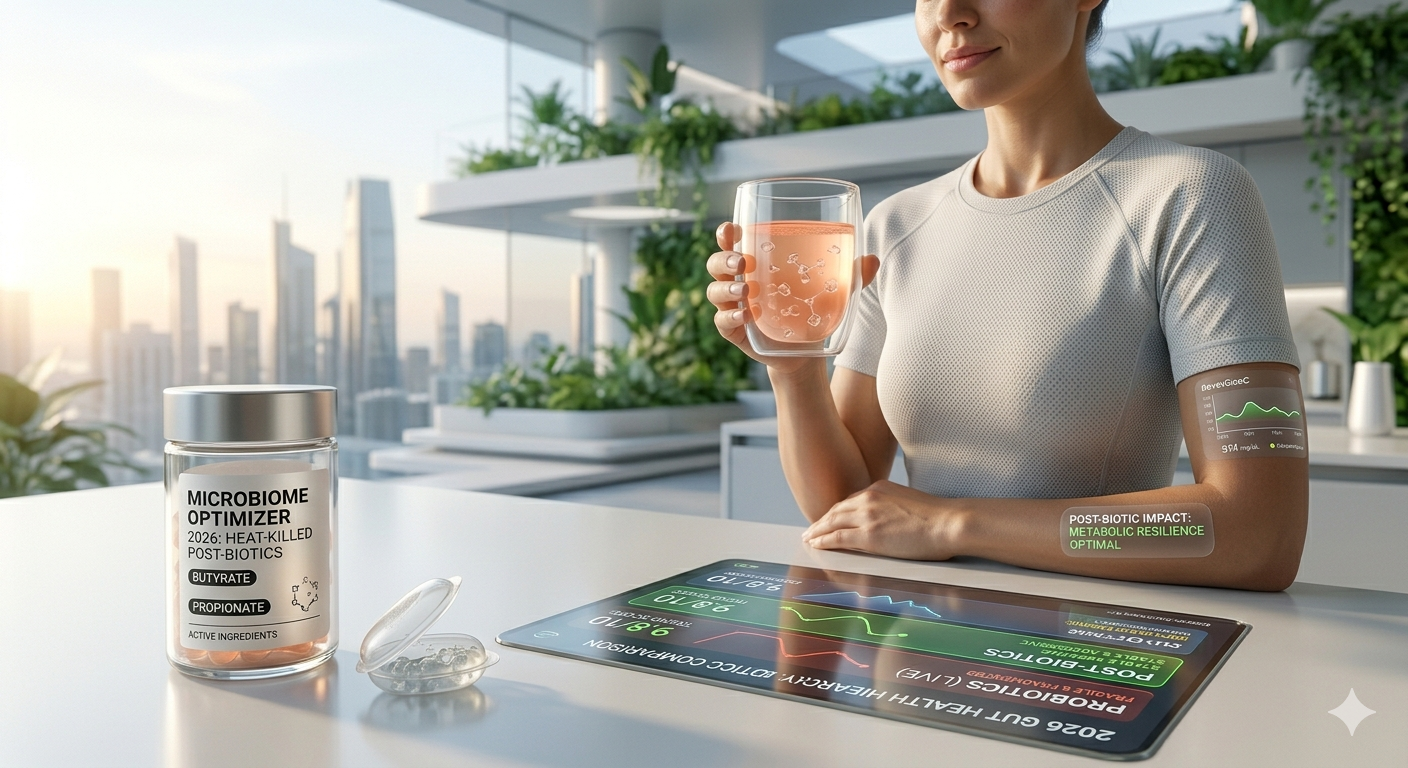
In 2026, the gut health conversation has moved past the “live bacteria” obsession toward Post-Biotics—the stable, heat-killed metabolites that actually do the heavy lifting in our microbiome. Unlike traditional probiotics that often die in the stomach, post-biotics are “pre-digested” bio-actives that provide immediate anti-inflammatory and metabolic benefits. This transition marks the end of the “refrigerated supplement” era and the beginning of shelf-stable, molecularly precise gut optimization.
Why are Post-Biotics Replacing Probiotics as the 2026 Gold Standard?
For decades, we focused on “seeding” the gut with live probiotics, hoping they would survive the acidic trek through the stomach and colonize the intestines. In 2026, we’ve realized that the “colonization” success rate is notoriously low. Post-biotics bypass this gamble by delivering the beneficial byproducts (like Short-Chain Fatty Acids or SCFAs) directly to the gut lining.
These inanimate microbial components are essentially the “medicine” that live bacteria produce. By taking them directly, you eliminate the risk of pathogen transmission and the bloating often associated with live bacterial fermentation. In a 2026 market driven by convenience and stability, the ability to put gut-healing power into heat-stable soft-gels and even ready-meals has made post-biotics the superior choice.
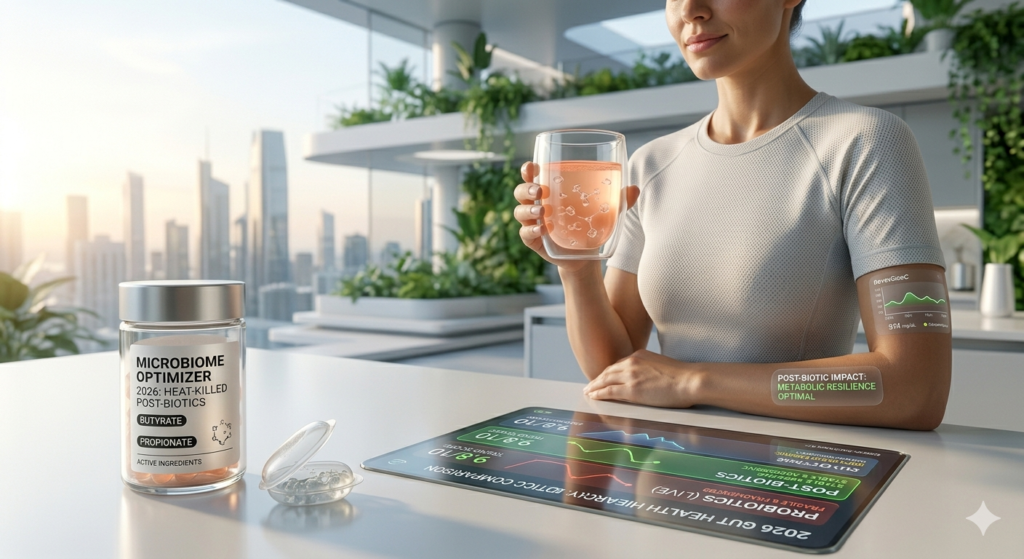
2026 Gut Health Hierarchy: Biotics Comparison
| Aspect | Probiotics (Traditional) | Post-Biotics (2026 Standard) | 2026 Trend Score |
| Active Component | Live Micro-organisms | Inanimate Metabolites/Cells | 9.8/10 |
| Stability | Fragile (Often requires fridge) | Heat-Stable (Shelf-stable) | 10/10 |
| Action Speed | Delayed (Requires colonization) | Immediate (Bio-active) | 9.5/10 |
| Digestive Ease | May cause temporary gas/bloat | Generally bloat-free | 9.0/10 |
What the Data Doesn’t Tell You: The “Dead Bacteria” Marketing Hurdle
As someone who has tracked the biotechnology of fermentation for fifteen years, I’ve watched the industry struggle with one specific nuance: how to sell “dead” bacteria to a public trained to love “live and active cultures.”
The data tells us that heat-killed strains like Limosilactobacillus fermentum K8-Lb1 are more effective for fat loss than their live counterparts. But what the data doesn’t tell you is the sensory relief of “Biotic Certainty.” With live probiotics, you are always guessing if the bacteria survived the shipping truck or your stomach acid. With post-biotics, the molecular profile is locked in. The real human win in 2026 isn’t just the biological efficacy; it’s the end of “supplement anxiety.” You finally know exactly what is reaching your colon.
Biometric Context: Enhancing Metabolic Flexibility and Focus
For the optimizers using CGMs (Continuous Glucose Monitors), the impact of post-biotics is visible in real-time. Specific post-biotic metabolites, such as Butyrate and Propionate, act as signaling molecules that increase the secretion of GLP-1 and PYY—the hormones responsible for satiety and stable blood sugar.
Technical Impact:
- Cognitive Load: New 2026 clinical trials have shown that post-biotic supplementation significantly improves the “ability to concentrate” by reducing systemic neuro-inflammation.
- Metabolic Resilience: By strengthening the epithelial barrier (the gut wall), post-biotics prevent “leaky gut” spikes in systemic inflammation, allowing for better metabolic flexibility during intermittent fasting or high-intensity web administration tasks.
Why is “Fibermaxxing” the Secret Partner to Post-Biotics?
In 2026, the most successful gut health protocols are “Synbiotic+.” This involves taking post-biotics alongside a “fibermaxxing” diet. While the post-biotic provides immediate metabolites, the high fiber intake ensures your existing microbiome continues to produce its own endogenous post-biotics.
This dual-action approach is why we see the highest trend scores for products that combine heat-killed bacteria with precision prebiotics like Tributyrin or Akkermansia-targeted fibers.
FAQ: Navigating the 2026 Post-Biotic Breakthrough
1. Can I get post-biotics from fermented foods like Kimchi or Yogurt? Yes, but with a catch. Traditional fermented foods contain both live bacteria and their post-biotic byproducts. However, the concentration of specific therapeutic metabolites (like the K8-Lb1 strain for weight management) is much higher and more consistent in standardized supplements.
2. Are post-biotics safe for people with compromised immune systems? One of the biggest 2026 advantages of post-biotics is their safety profile. Because they do not contain live, replicating bacteria, they eliminate the risk of “opportunistic infection,” making them the preferred choice for immunocompromised individuals or those recovering from heavy antibiotic cycles.
3. Do post-biotics help with the “Ozempic-Grip” (GLP-1 side effects)? Emerging data suggest they do. By improving gut motility and the integrity of the intestinal lining, post-biotics can help mitigate the nausea and “slow-gut” feelings often associated with metabolic medications.
4. How long does it take to see results from post-biotics? Unlike probiotics, which can take weeks to shift your microbiome, post-biotics begin interacting with your immune receptors and gut lining within hours. Most users report improved focus and reduced bloating within the first 3 to 5 days.